Blog · Photo · 5 min read
Phone vs professional real estate photography
Phone vs professional real estate photography: what really differs, the most common phone mistakes and when shooting a listing yourself is good enough.
 Bohuš Zeman
Shooting a property on your phone is fine for a quick preview for a friend or for recording the condition of a flat. For a listing that has to stand out among dozens of similar ones, though, a phone hits limits that no app or filter can get around.
We compared both approaches honestly: where the difference lies, the mistakes we see most often in phone photos, and when a phone is perfectly good enough.
Phone vs professional: where real estate photos differ
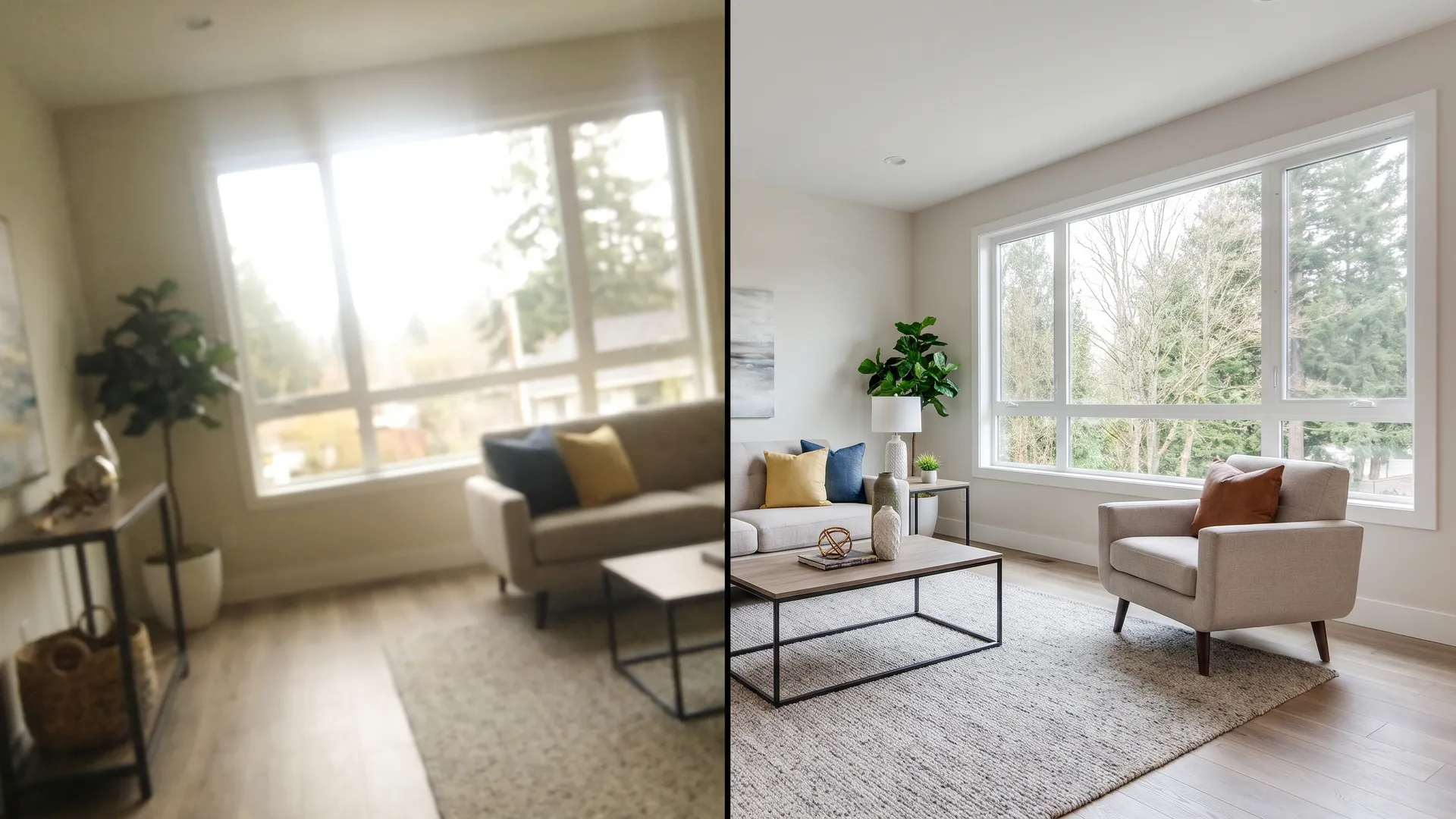
Today’s phones take excellent photos, but they are designed for people, food and holiday scenery. Interiors are a different discipline: a huge gap in brightness between the window and the room, small spaces and straight lines that show every bit of distortion. The difference comes down to four things:
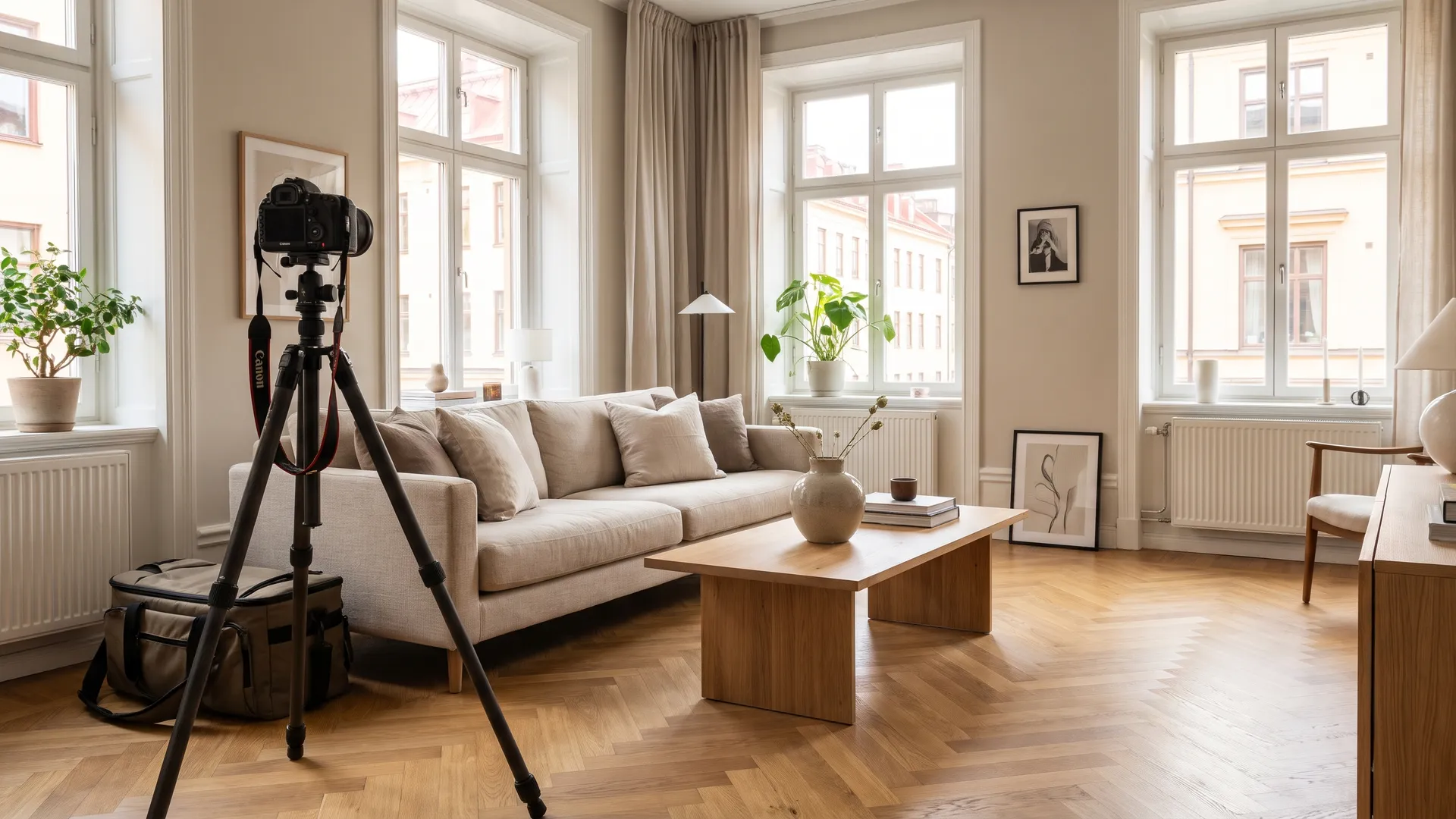
- Sensor and lens: a phone has a small sensor and software that sharpens and smooths in low light, so textures look artificial. A professional shoots on a full-frame body with 16–35 mm and 24–70 mm wide-angle lenses.
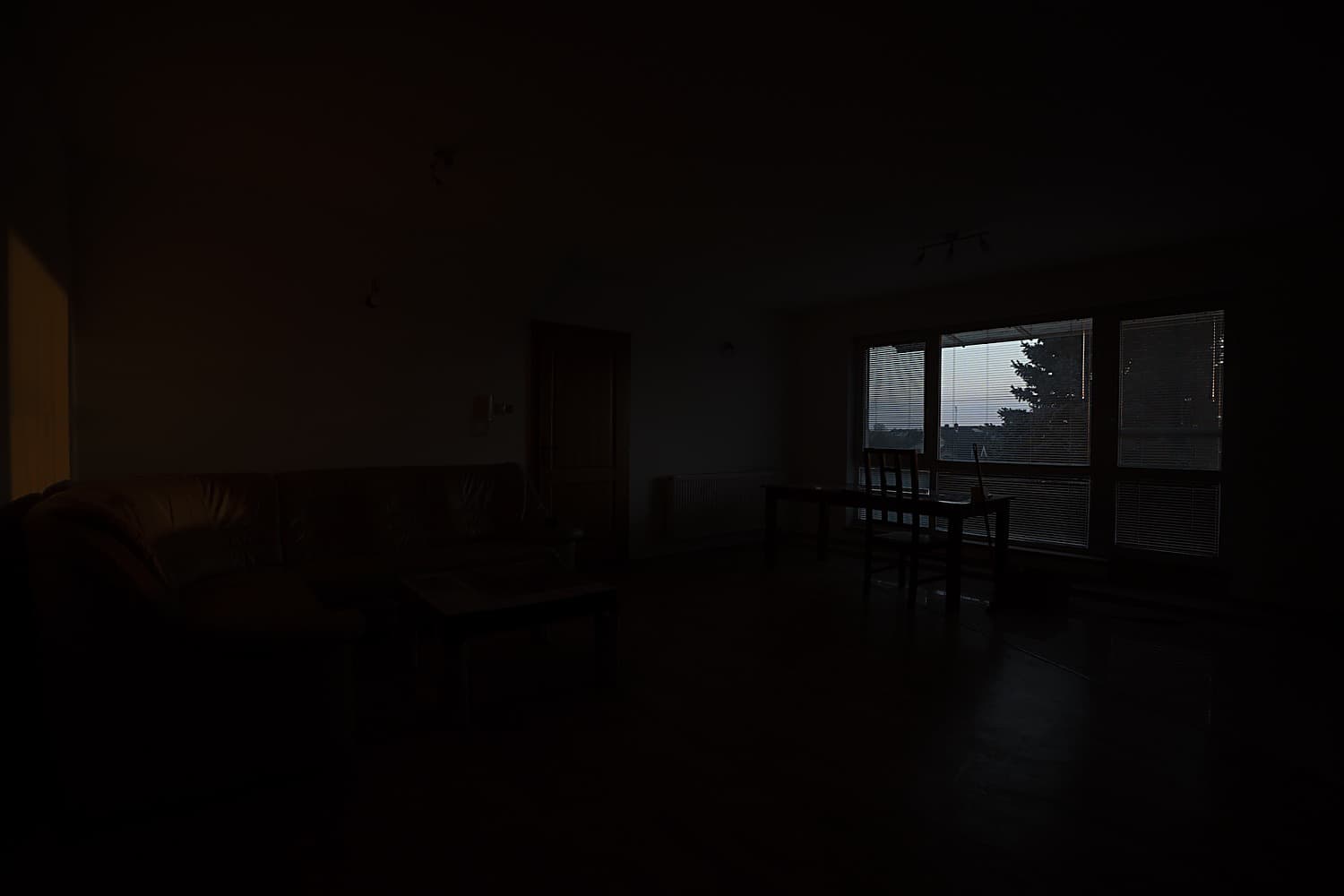
- Light and windows: near a window, a phone either blows out the view or darkens the room. A professional shoots five exposures from a tripod and blends them, so both the window and the interior show.
- Perspective: a phone’s ultra-wide mode bends walls and furniture at the edges, and a tilted phone makes walls “lean”. A professional keeps verticals straight and corrects the perspective in retouching.
- The result: from a phone you get the photos as they came out. A professional delivers an edited set with corrected colours, a replaced sky and no distracting objects, ready for portals, the web and print.
What about a phone’s automatic HDR? It helps, but it merges handheld frames in a split second, without any control on your part. Windows often end up grey, colours flat, and the slightest movement leaves blurred edges. Five exposures from a tripod are sharp, and we blend them in editing so every detail fits.
On top of the gear comes experience: where to stand so a room looks its most spacious, how to show the layout and in what order to arrange the photos so the listing makes sense. You cannot install that on a phone.
The most common mistakes when shooting a flat on a phone
- Shooting straight into a window: you get a white rectangle instead of a view, or a dark room.
- Ultra-wide at full stretch: the room looks bigger, but buyers spot the bent walls and stretched furniture immediately.
- Shooting from eye level, tilted down: the walls converge and the space feels cramped.
- Mixed lighting: yellow bulbs combined with daylight give patchy colours that are hard to fix.
- Clutter in the frame: personal items, cables, towels and fridge magnets pull attention away from the space.
- Random order: photos with no logic, no overall shot of a room, or the same angles over and over.
- Filters and digital zoom: exaggerated colours and blurry details look untrustworthy.
When a phone is good enough
Not every photo has to be professional. A phone is perfectly fine if you:
- are recording the condition at a handover, before a renovation or for insurance,
- are sending a quick preview to a friend or a prospect before a viewing,
- are renting out a garage, cellar or storage unit, where price and location are what count,
- only need material for yourself, for example to compare layouts.
If you are shooting yourself, a few rules help: shoot during the day, tidy up and remove personal items, switch off yellow lights, hold the phone level at chest height and shoot in landscape. Go easy on ultra-wide and take one shot too many rather than one too few.
When a professional photographer pays off
As soon as a photo has to sell, a phone works against you. We recommend a professional whenever:
- you are selling or renting through property portals, up against similar listings,
- the flat has large windows, a view or, on the contrary, little light,
- it is a new build or a development project,
- the property is in a higher price bracket,
- you want to use the photos on your website, social media and in print too.
Professional photography of a flat up to 50 m² starts at €99 excl. VAT, a fraction of the property’s value. You get the photos within 24 hours of the shoot, guaranteed and at no extra cost, so the listing does not have to wait. Within Bratislava there is no travel fee either.
Empty flats: where phones fail the most
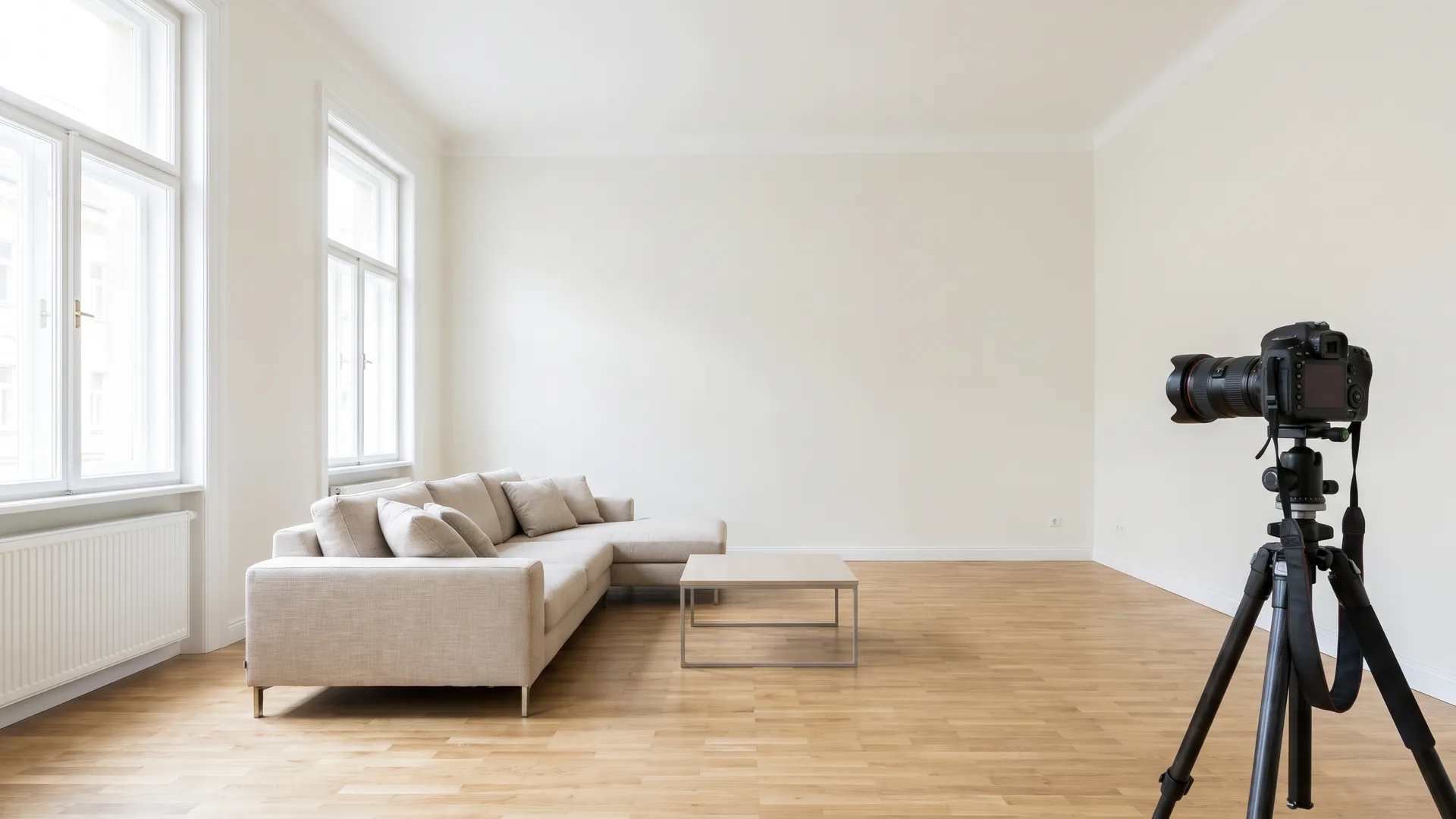
An empty room is the hardest thing for a phone: white walls, reflections on the floor and nothing to show scale. In the photo it looks smaller and colder than it really is. The answer is virtual staging: we furnish the rooms digitally with pieces that suit the space and the target buyer.
Staging is ready within 48 hours, one round of changes is included, and it costs from €19 per photo or €79 for a pack of five. We can stage your own photos if they have enough quality and resolution, but the best results come from photos we take ourselves. In the listing, we recommend labelling staged photos as illustrative and keeping a photo of the original state too.
In short: a phone is good for records and quick previews, a professional is for selling. If a photo has to bring in enquiries and viewings, you will see the difference in the first days of the listing.
Why isn’t a phone photo of a property good enough?
A phone has no full-frame sensor, no professional lens and no real bracketing. Near windows it either blows out the interior or darkens the room, and wide-angle mode bends the walls. The difference shows in the number of enquiries and in the price.
How much does a professional photographer cost for a flat?
Photographing a flat costs from €99 (up to 50 m²), a larger flat from €119 and a family house from €169, excl. VAT. Travel within Bratislava is free, outside the city it is €0.39/km. We send an exact quote the same day you enquire.
How quickly do I get professional photos?
Within 24 hours of the shoot, guaranteed and with no rush surcharge, often the same evening.
Can you do virtual staging on phone photos?
Yes, if they have enough quality and resolution. The best results come from photos we take ourselves.
Can I use the professional photos on my website and social media too?
Yes. Rights to use them in marketing the property are always included: listings, website, social media and print.